A new chapter
The work continues
Teeter dreamed of growing the sacred mushroom by hand. Volodymyr Sobol, a Ukrainian mycologist, has spent years turning that dream into laboratory practice.
Teeter's pages describe the fly agaric as a living culture that can be grown and multiplied. For most of the Society's life that remained a hope: the mushroom forms partnerships with tree roots and is notoriously hard to grow apart from them.
The new chapter starts in the laboratory. The three plates below are the milestones so far; notes and results will be published here as they are ready.
A pure culture
About five years adapting Amanita muscaria to grow cleanly on agar.
Solid-state fermentation
An original method for growing the mycelium on grain.
Laboratory analysis
Laboratory analysis of fly agaric mycelium, alongside a GC–MS analysis of fly agaric powder.
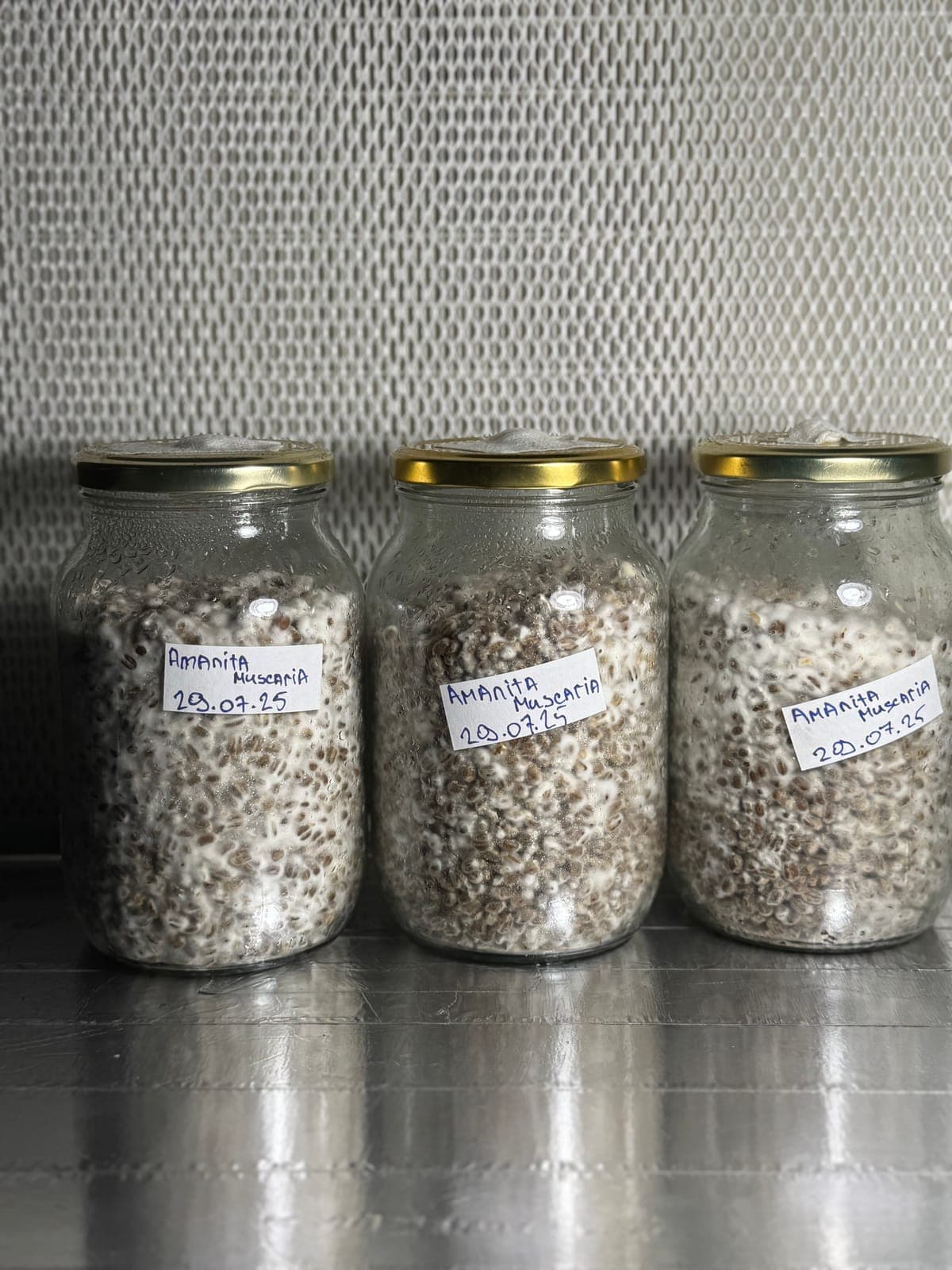
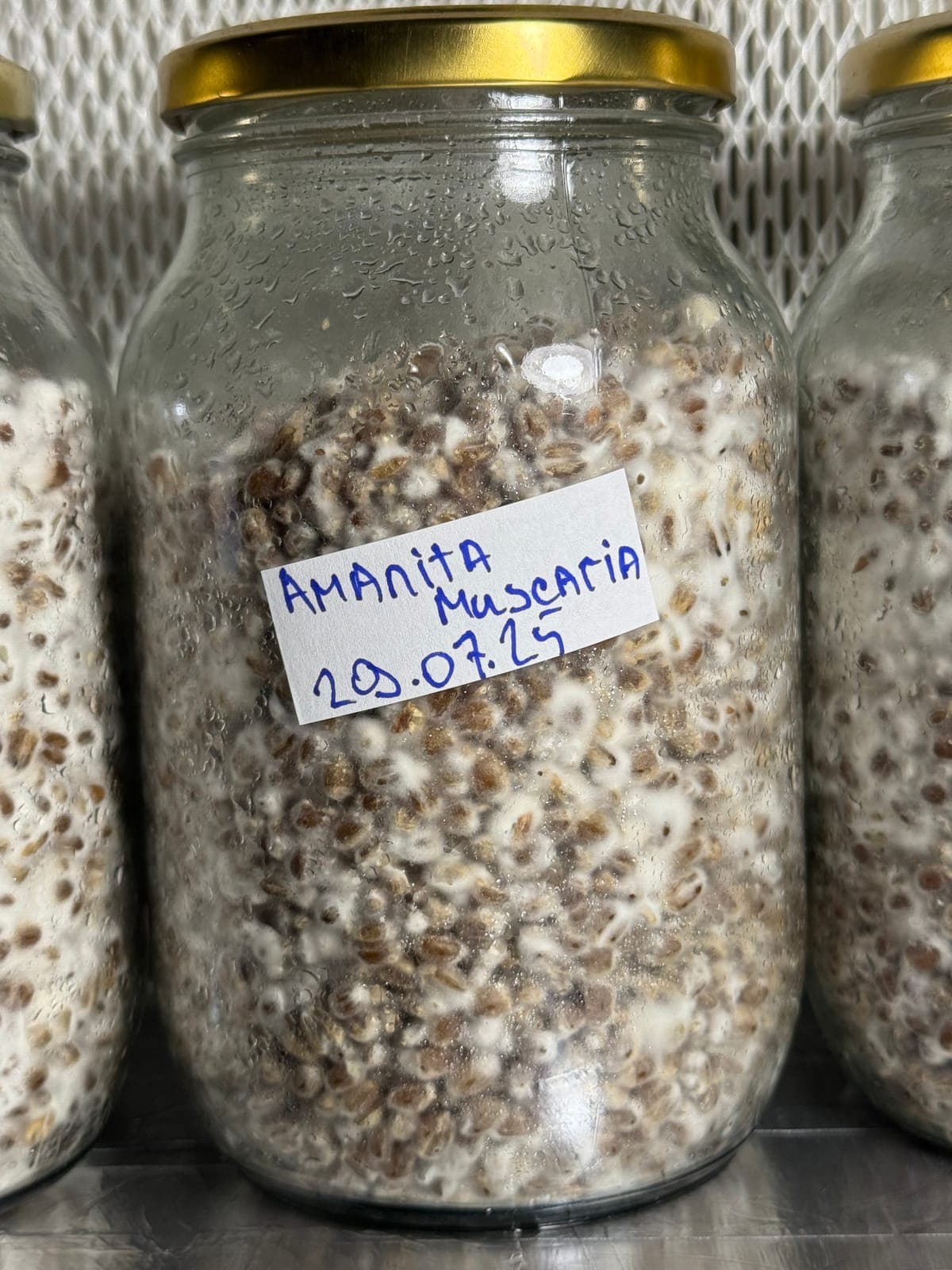
Grain mycelium
Amanita muscaria mycelium spreading through sterilised grain in sealed jars. The jars were inoculated on 20 July 2025; the photos were taken four weeks later.
The wine
Teeter wrote that the fly agaric's living culture, his “eternal fleece”, would grow across grape juice and turn it into his sacred wine. These bottles, started on 31 July 2025, put that claim to a laboratory test: the white mats on the surface are the culture growing on the juice.
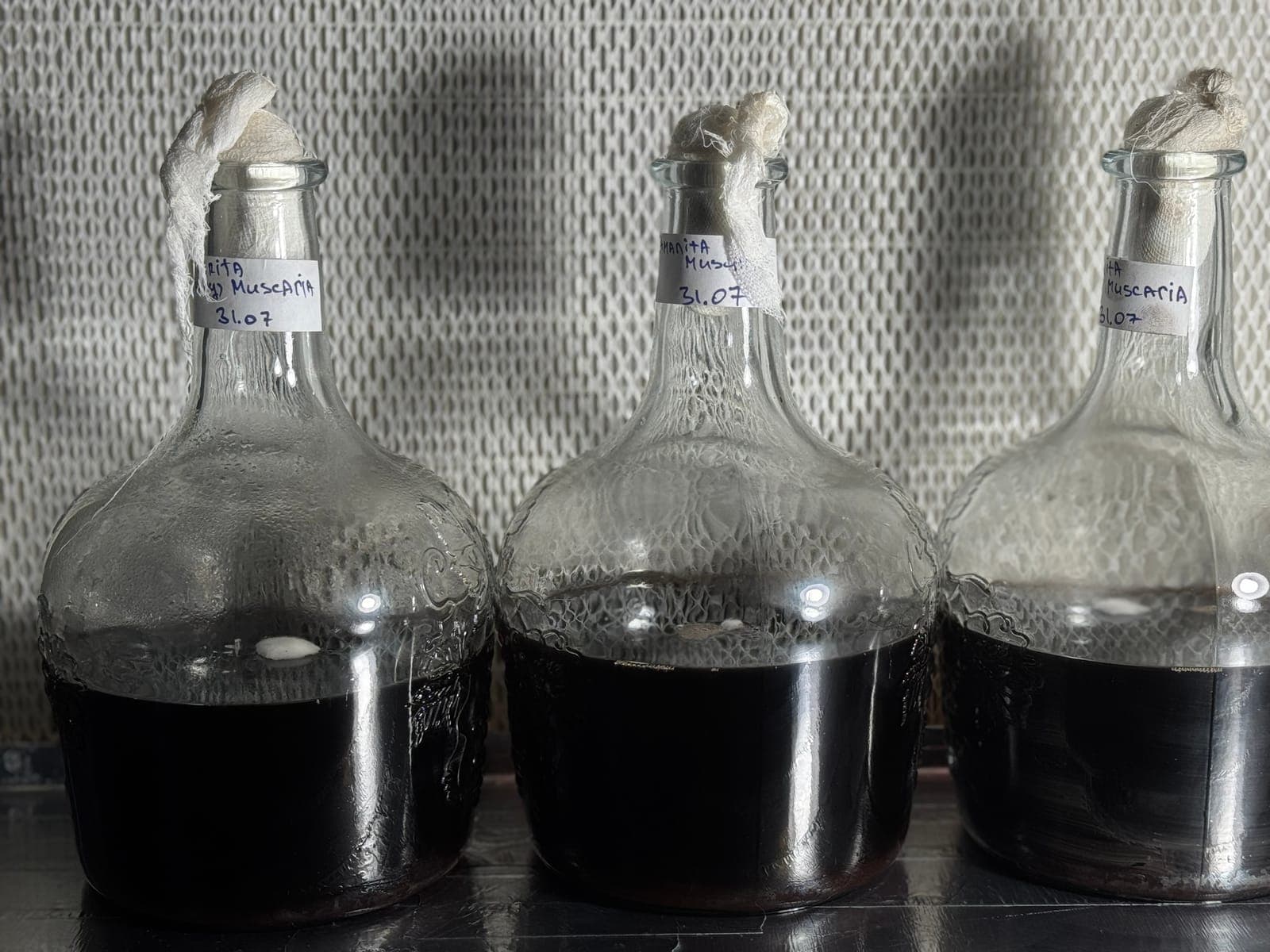
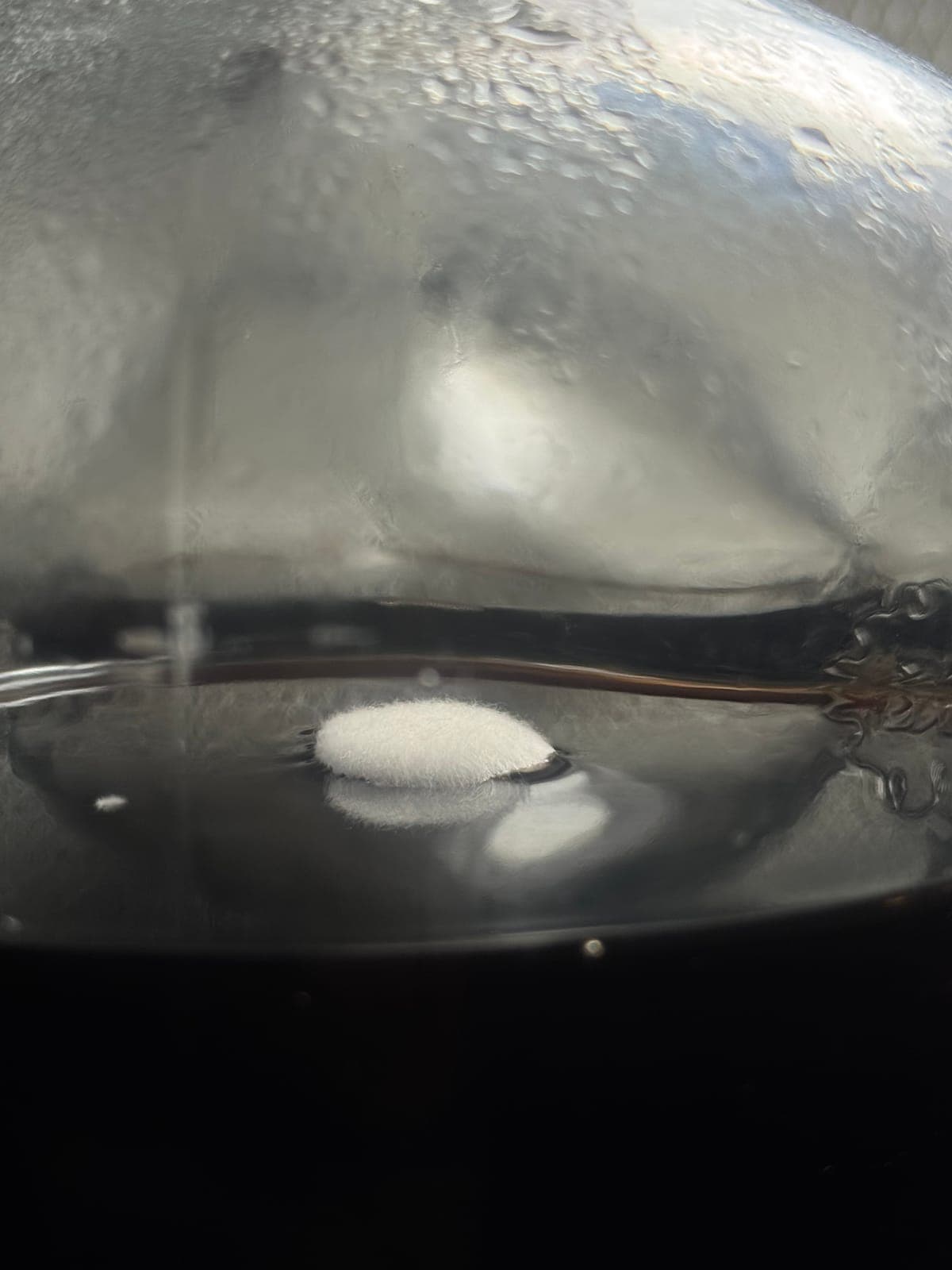
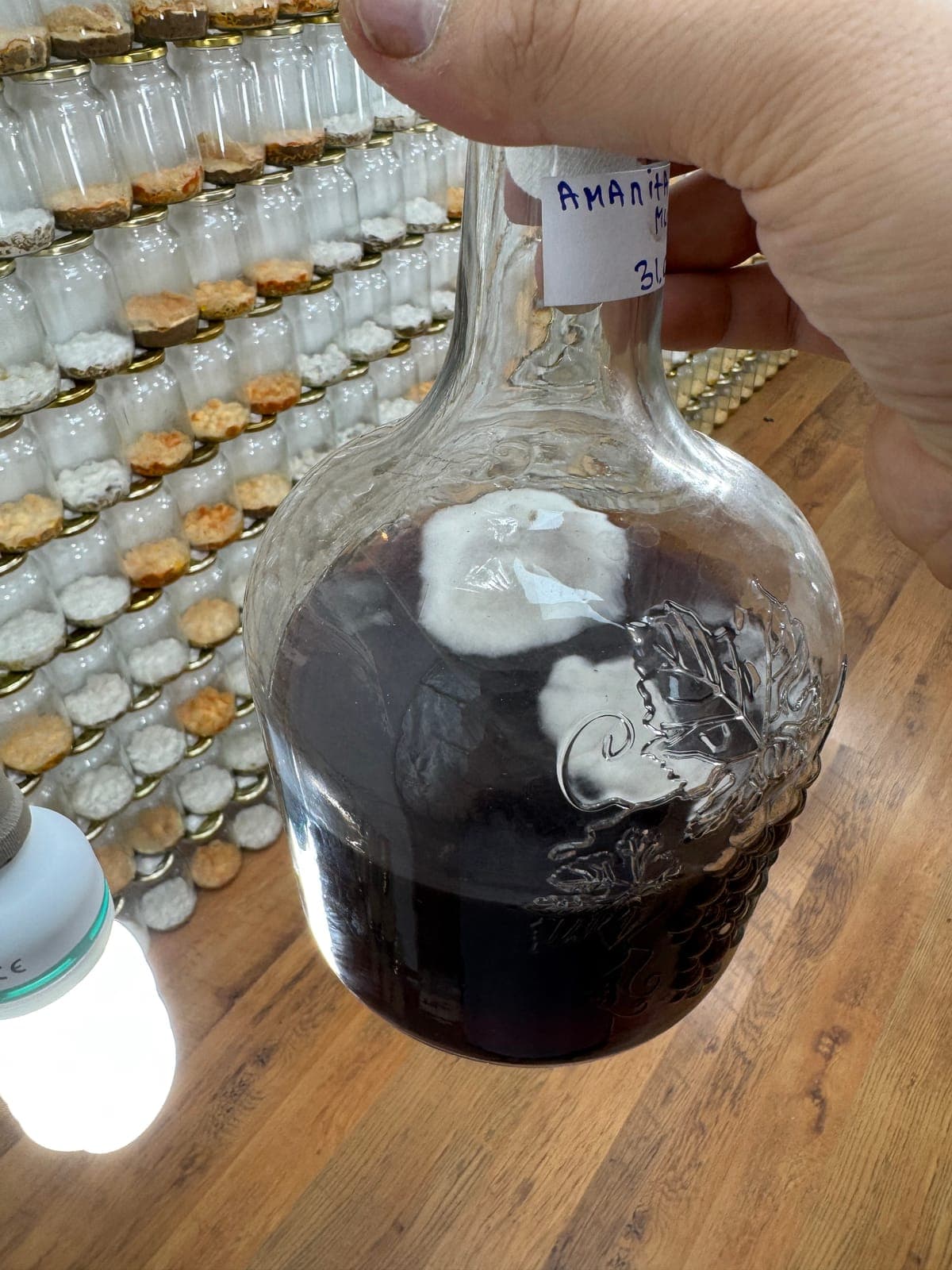
From the lab, August–October 2025
Short clips, without sound.
Laboratory analysis
Two analyses in one unit, milligrams per kilogram, on a logarithmic scale: a sample of fly agaric mycelium tested in 2024, and fly agaric powder.
The two samples were analysed separately and reported in different units, so the figures are not a strict comparison; the mycelium values are converted from mg/g to mg/kg without rounding. The powder report does not name the laboratory or the test date.
None of the 13 tryptamines tested, including psilocybin and psilocin, was detected in the mycelium.
Sources
Mycelium: California Ag Labs (Marysville, California; A2LA-accredited, certificate 6099.01), sample 2407CRG1534.4134, received 15 July 2024, tested 19 July 2024. The report gives mg/g; the figures here are ×1,000. Full certificate (PDF)
Fly agaric powder: test report on dried fly agaric powder, gas chromatography–mass spectrometry and spectrophotometry, results in mg/kg.
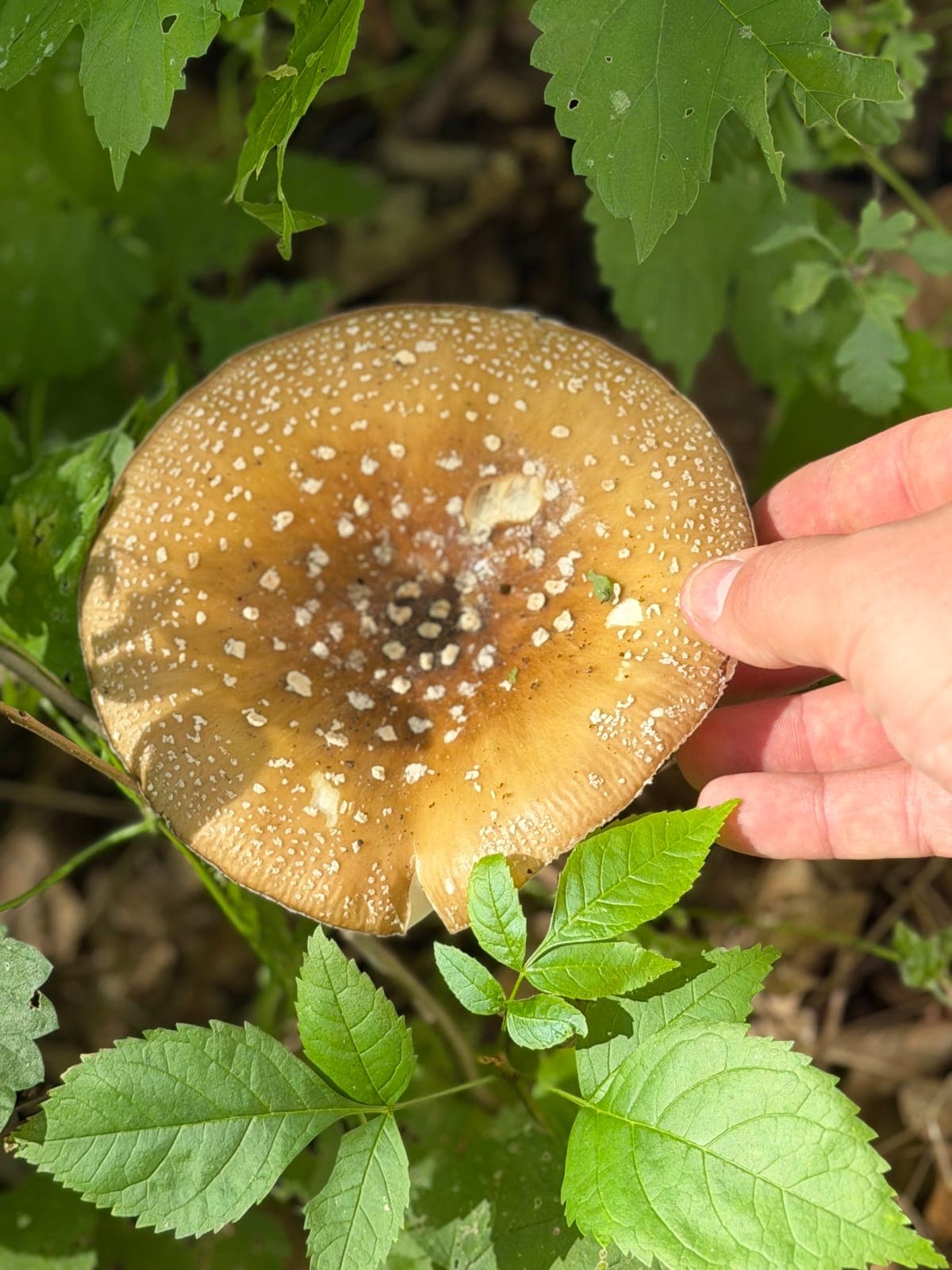
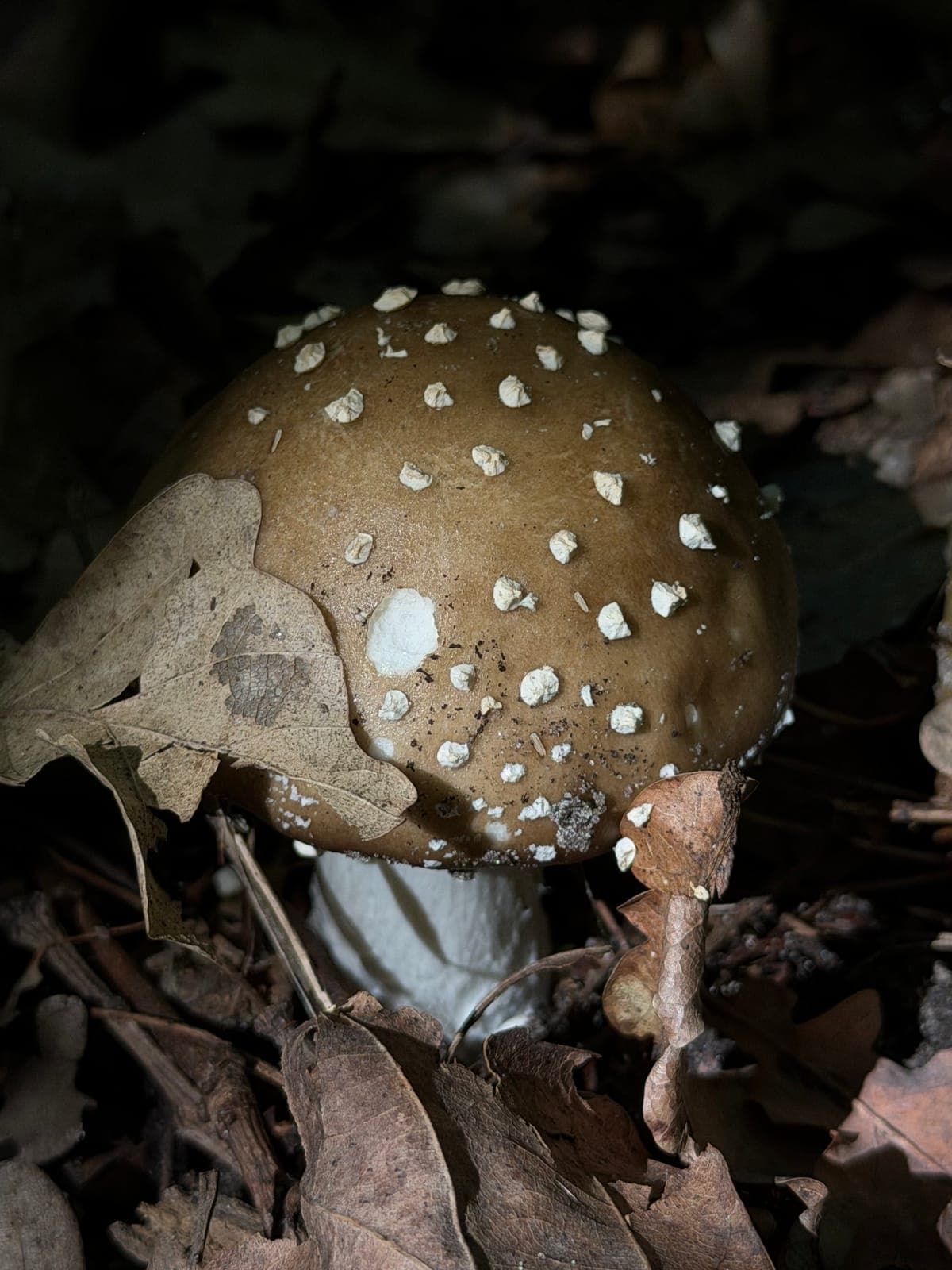
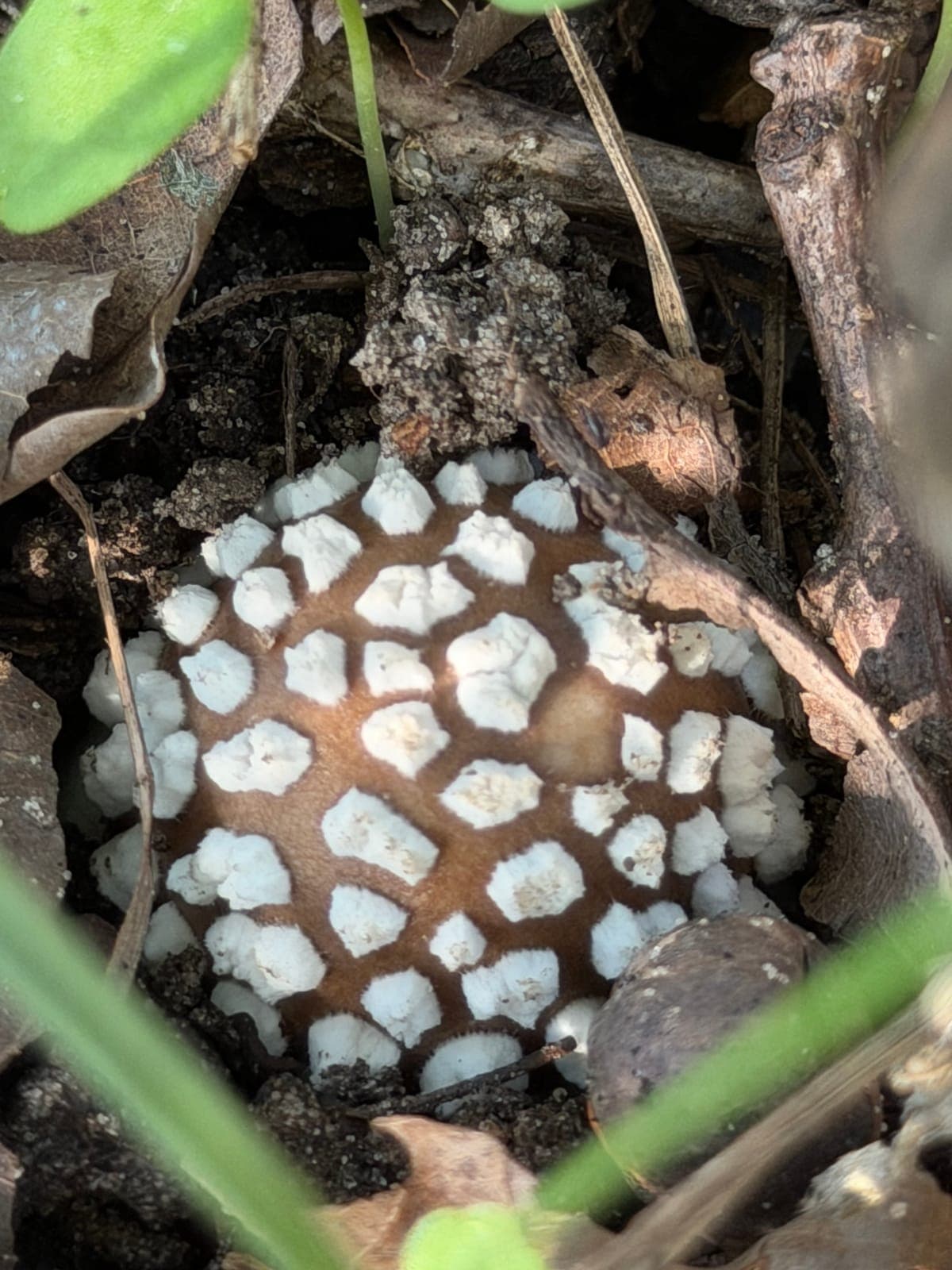
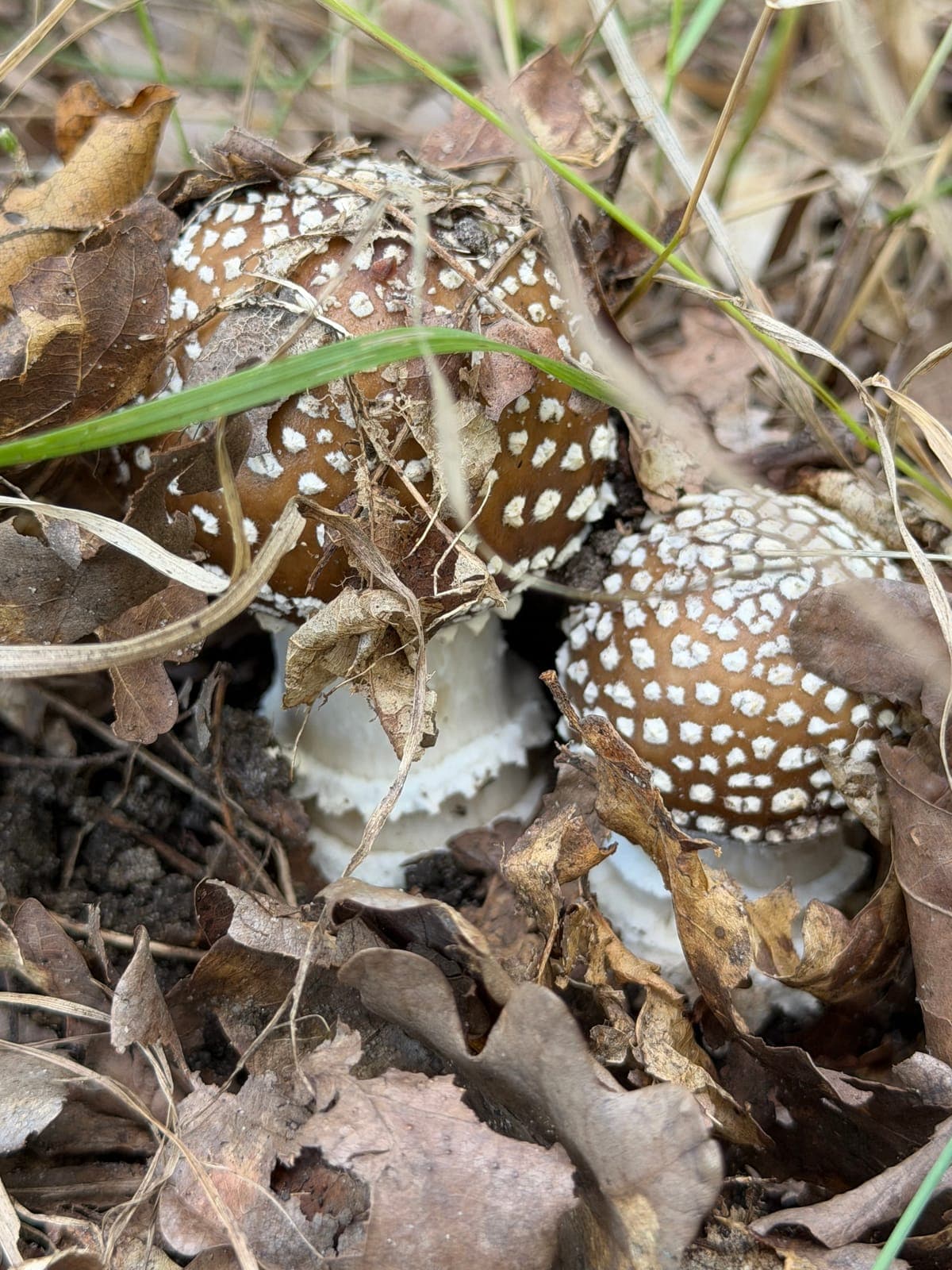
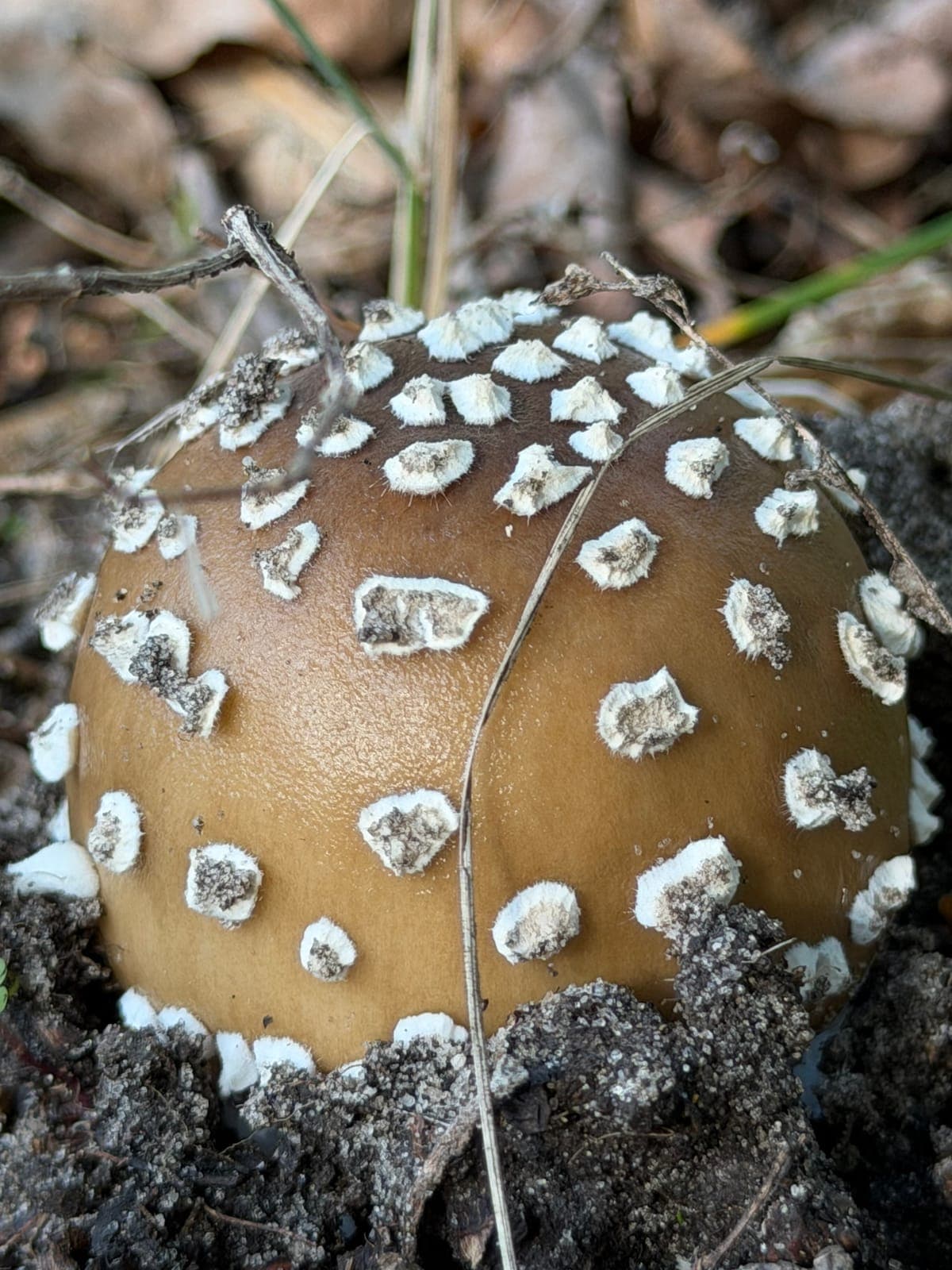
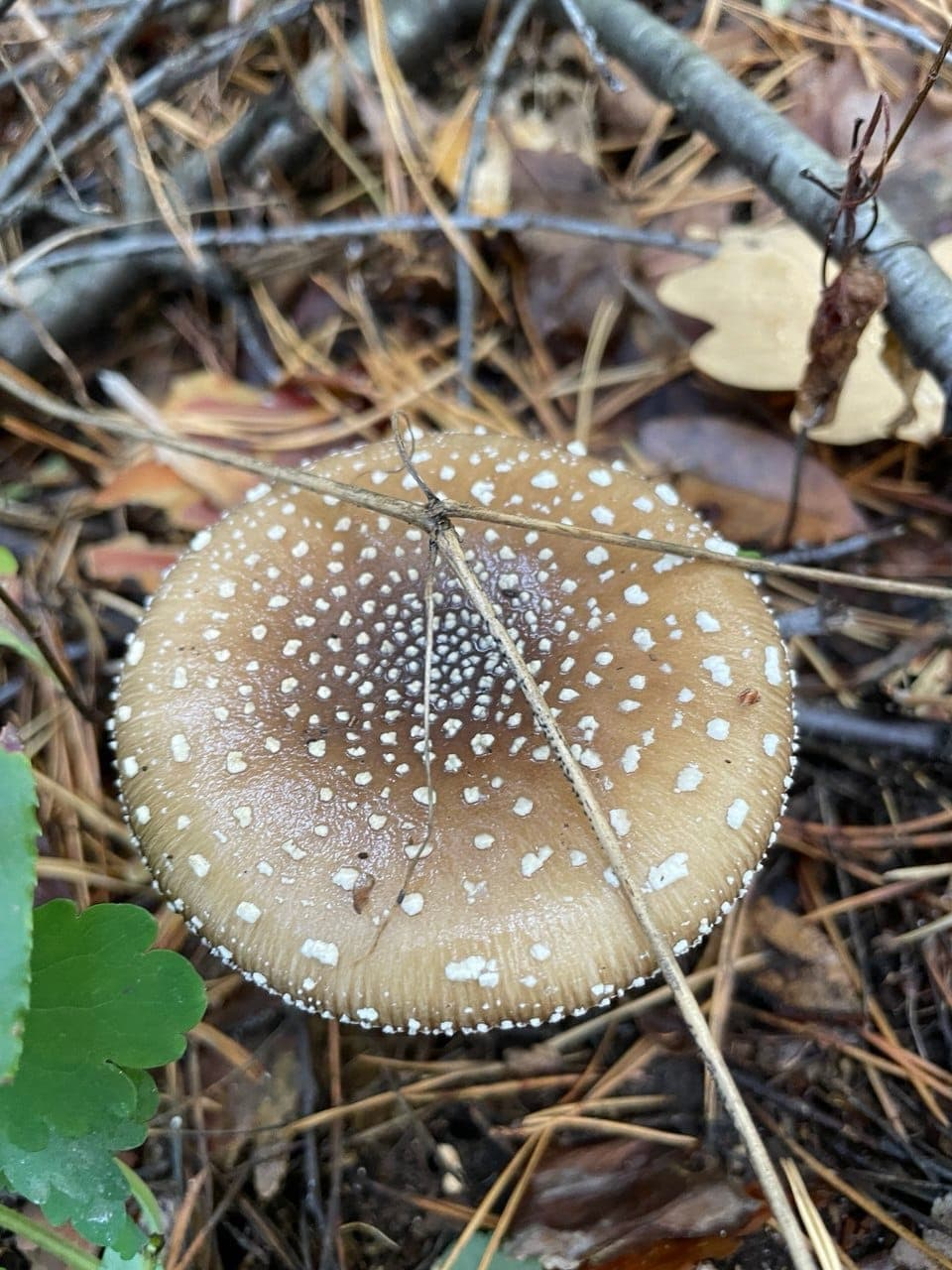
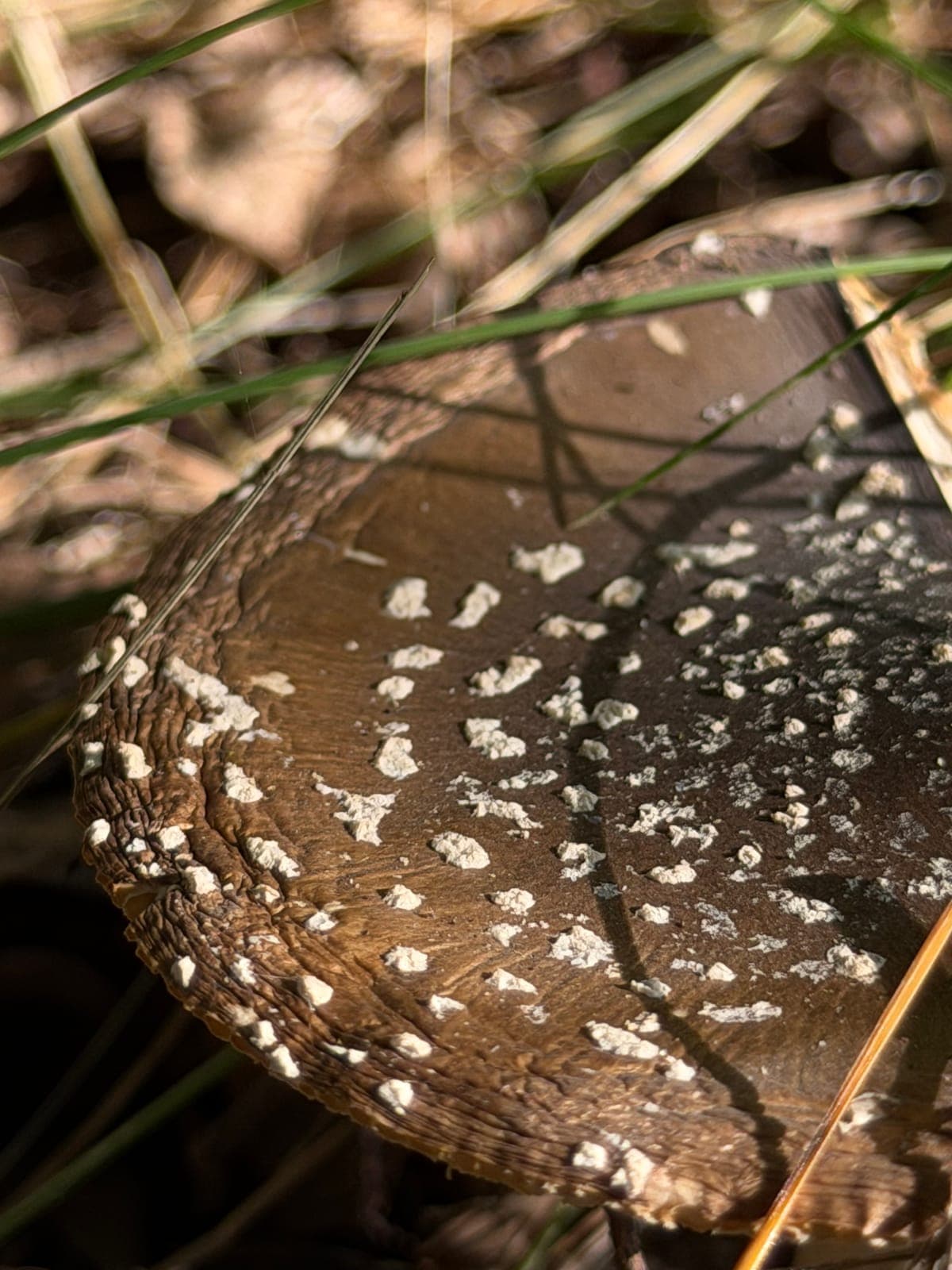
Three amanitas
The fly agaric was Teeter's subject. Two of its relatives are now part of the work.
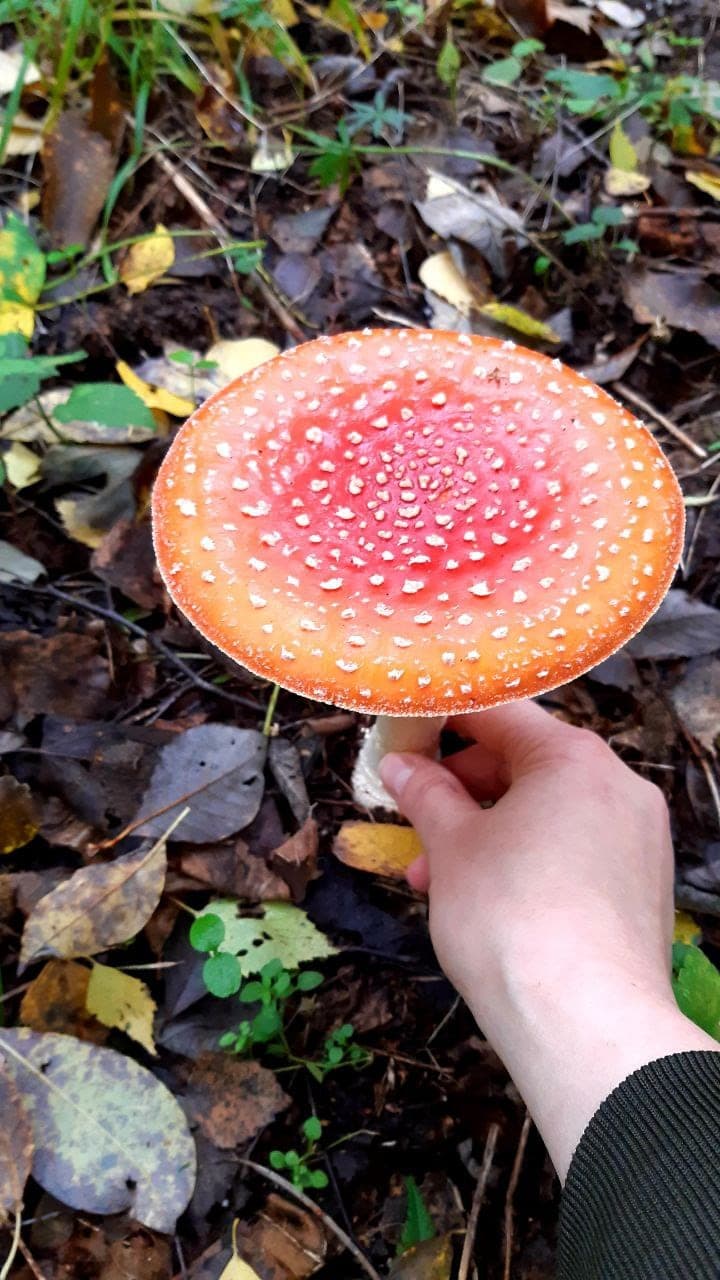
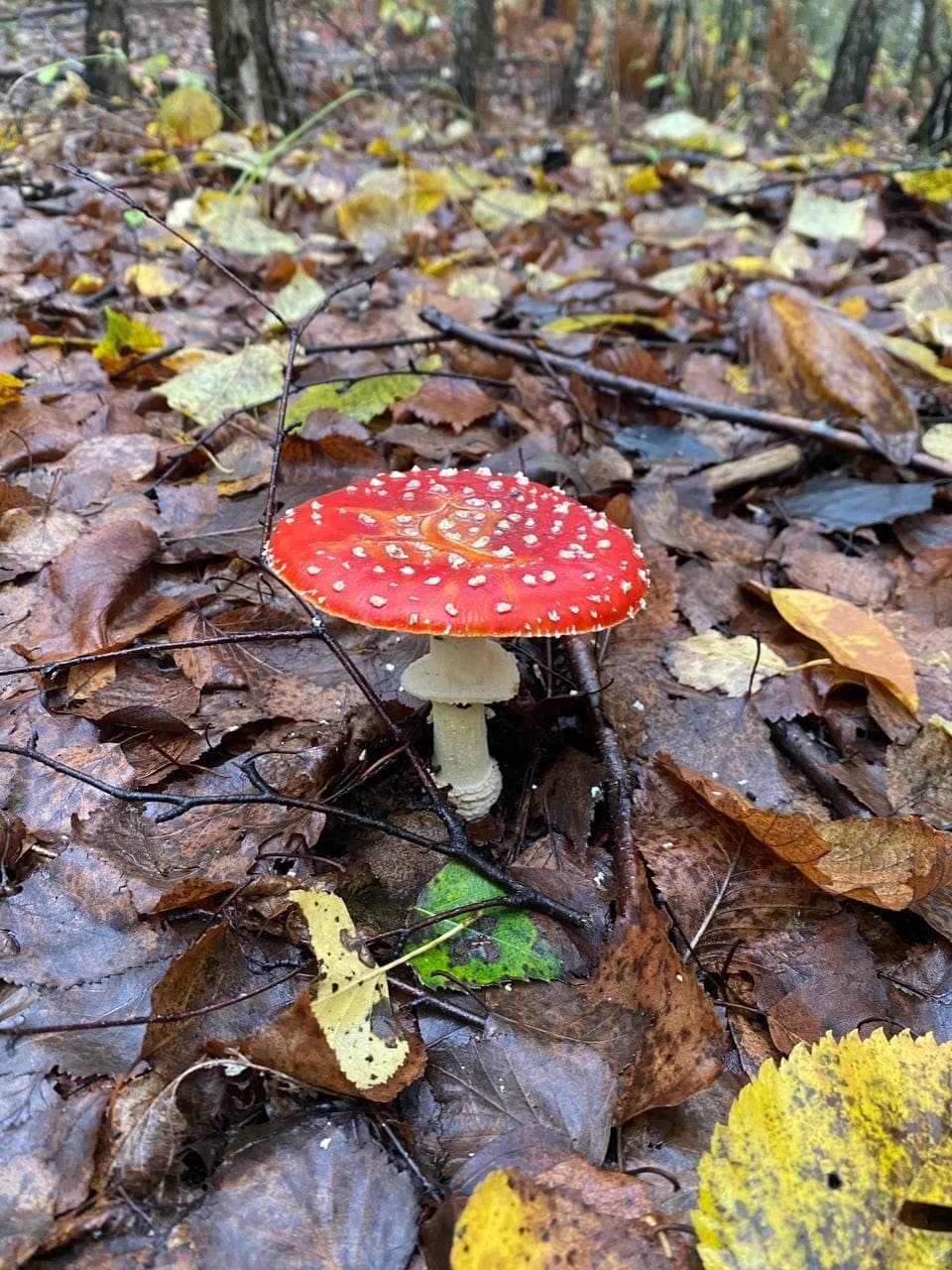
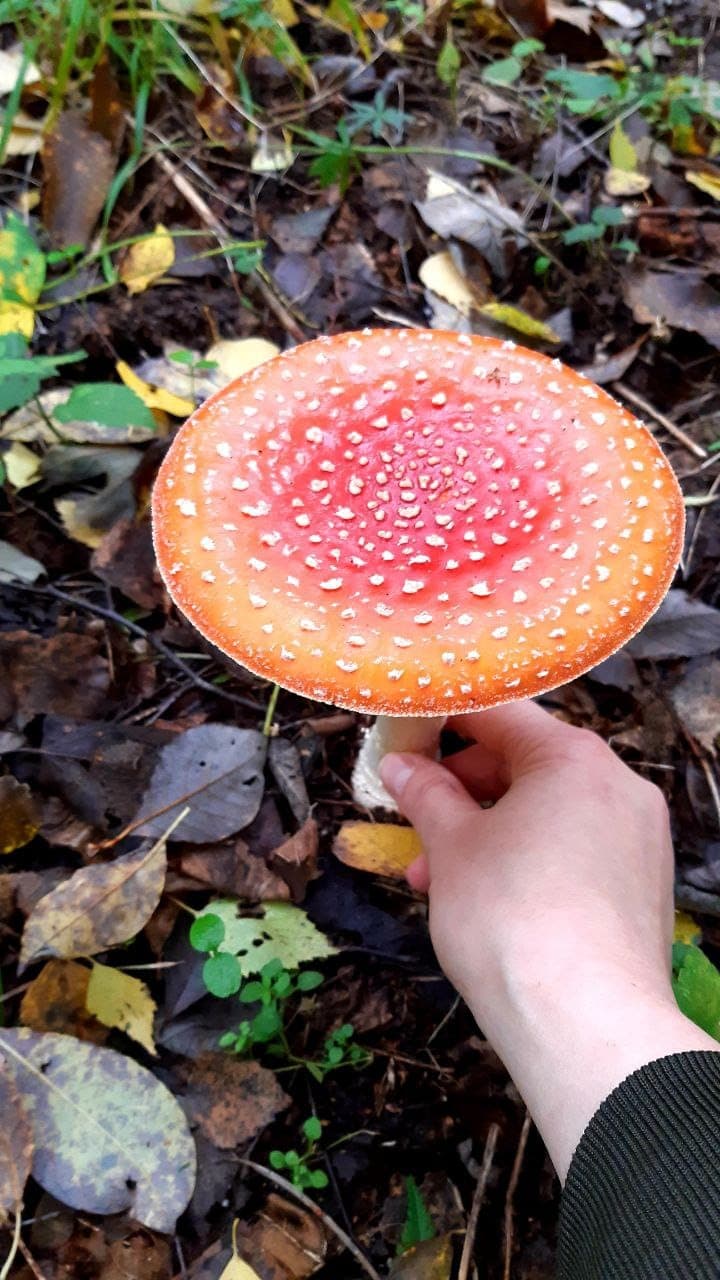
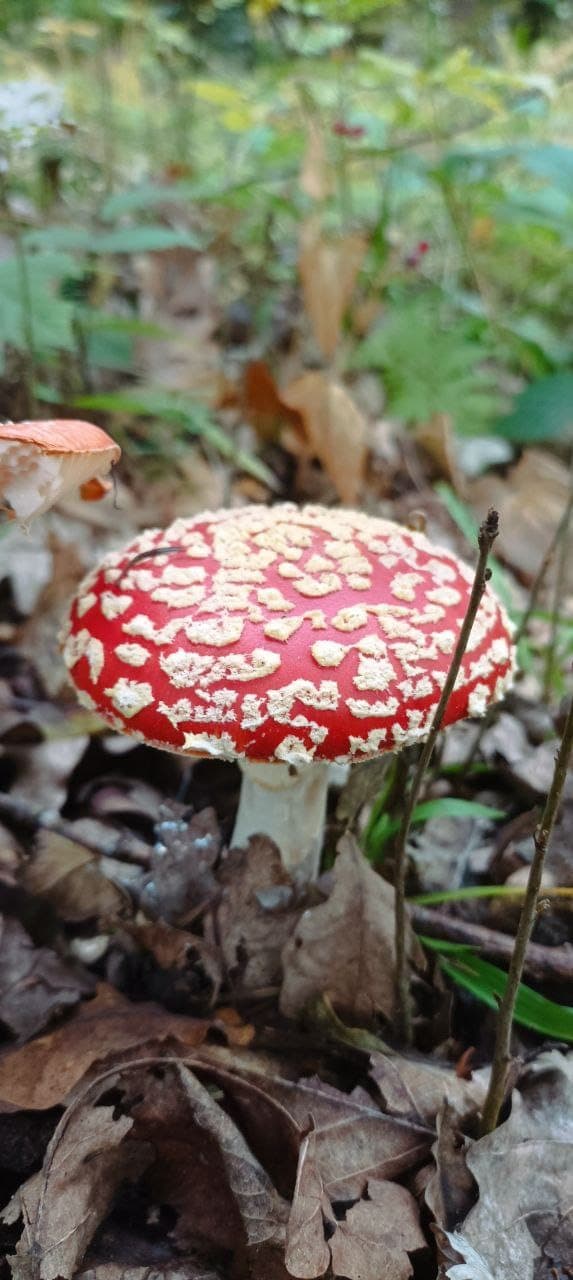
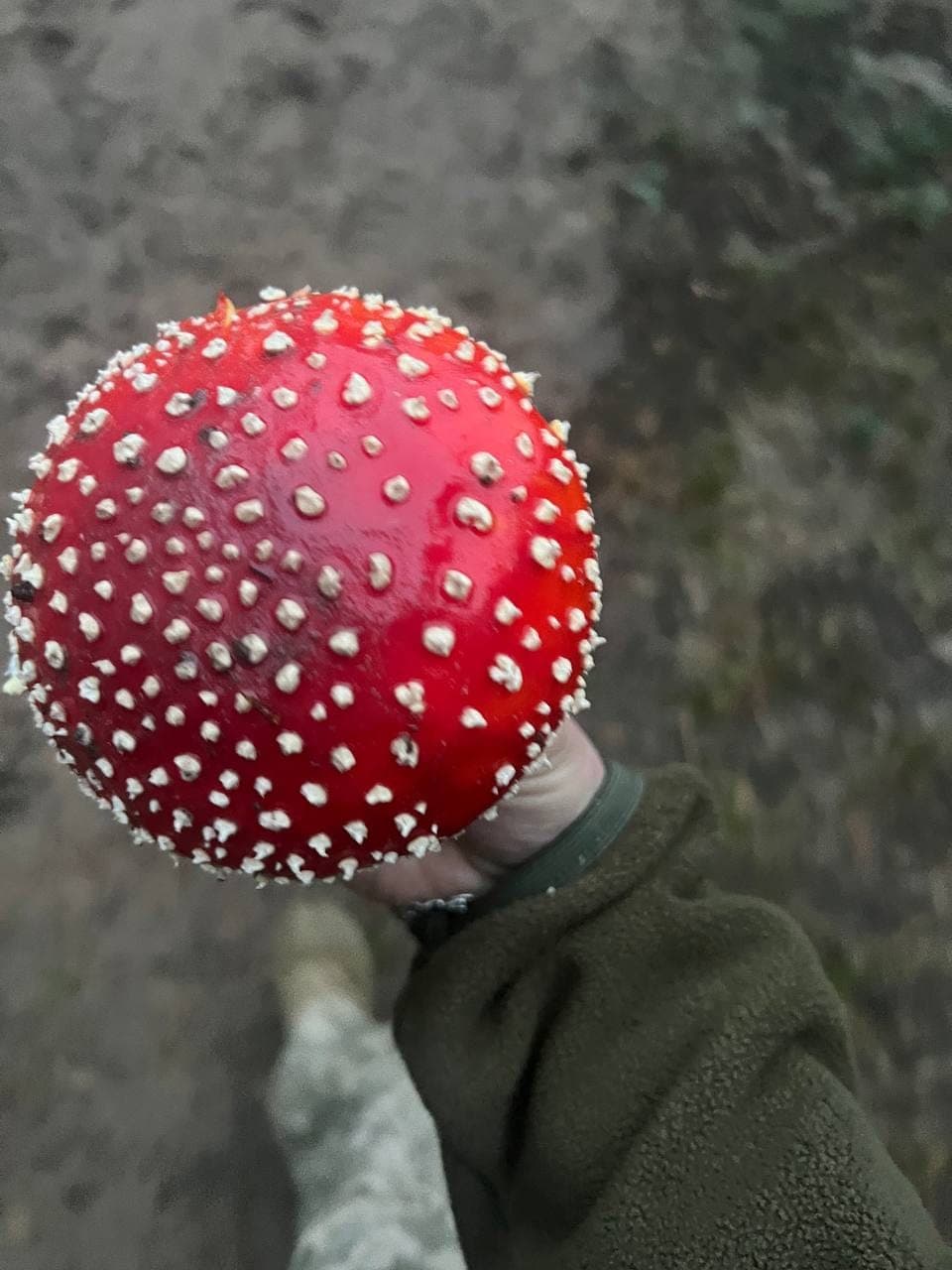
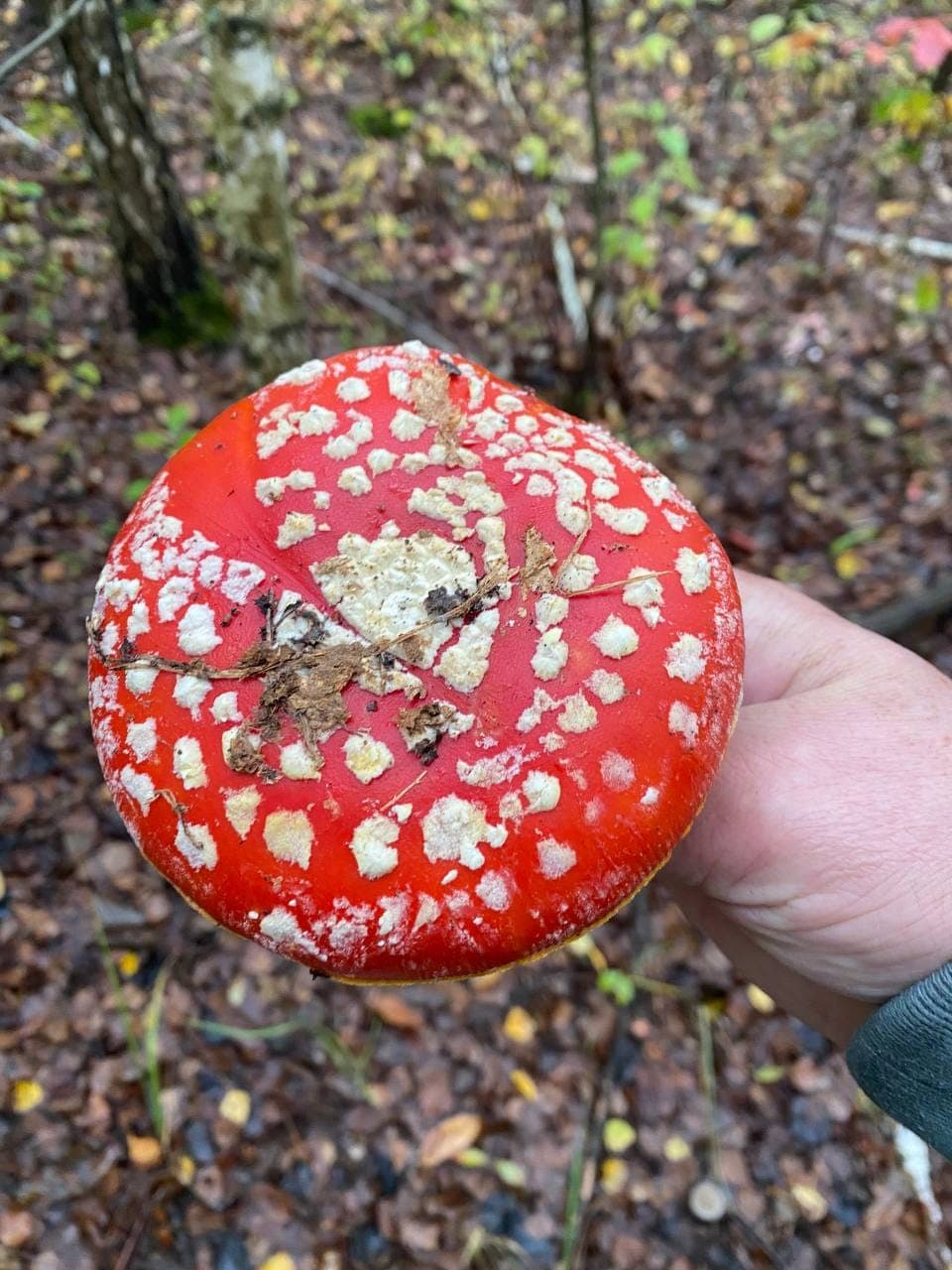
Fly agaric · Amanita muscaria
The species at the centre of Teeter's work and of the cultures above. Field finds.
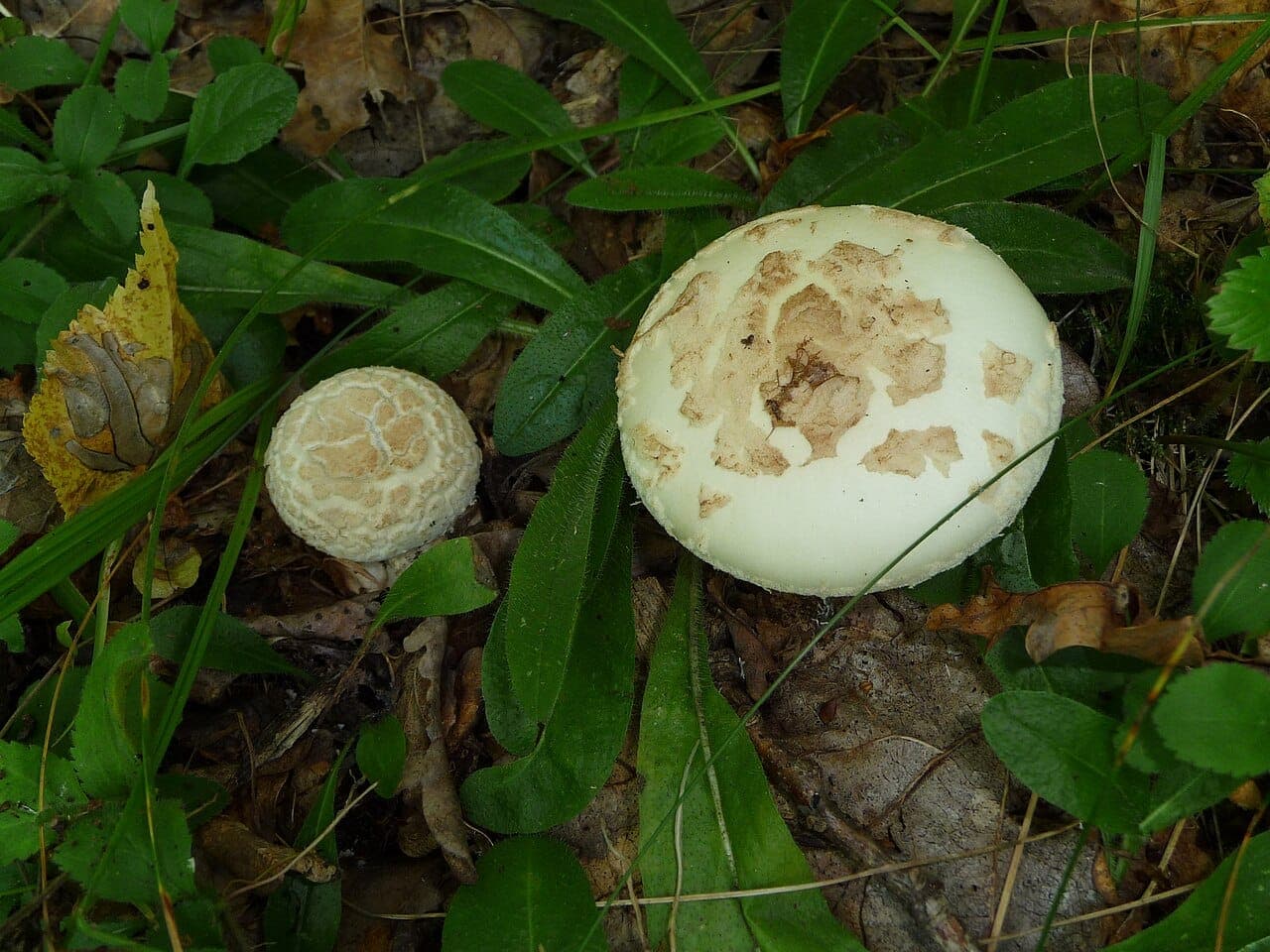
Panther cap · Amanita pantherina
Under study now: a pure culture has already been isolated from it.
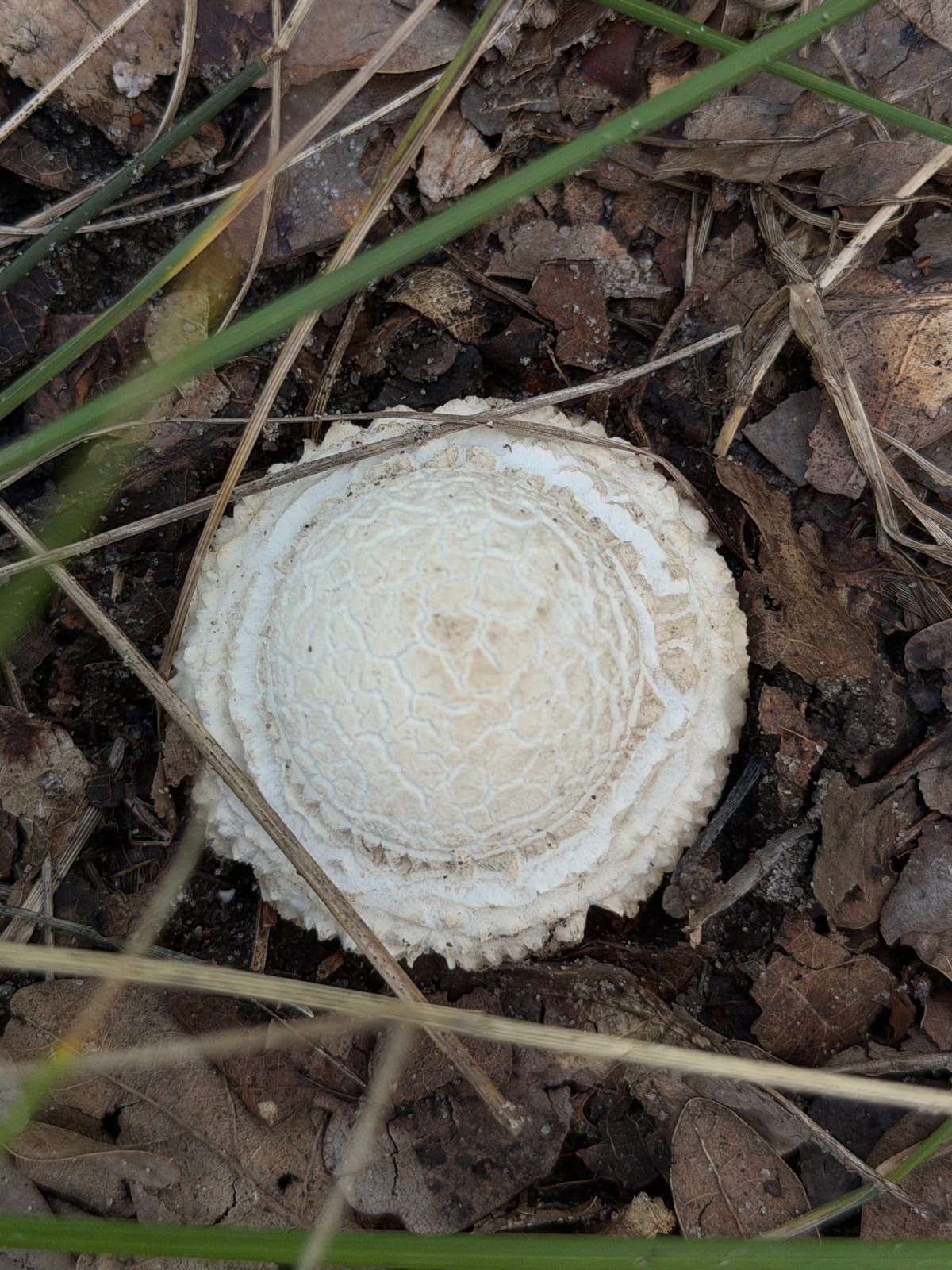
False death cap · Amanita citrina
Next in line: a culture from an institute's collection is on its way, and work with this species will begin when it arrives.